Who Deserves Your Ultimate Allegiance?
by Pete Burak | Jul 28, 2026
I recently read a book that I found very compelling and insightful for this moment we are living in. The book is called Cultural Sanctification: Engaging the World Like the Early Church by Stephen Presley. I was captivated by this idea of cultural sanctification. We instinctually understand what culture is and as Catholics, we have a sense of what sanctification is, but to bring the two of them together is an interesting juxtaposition. What does it look like for us as Catholics to be in the world in such a way that it leads to the sanctification of our friends, families, and neighbors, and ultimately, to the transformation of culture?
In this book, Dr. Presley analyzes the early Church, particularly in the second century before Constantine legalized Christianity and the faith transformed the Roman Empire. He explores the wisdom of the early Church fathers and martyrs and considers how we can utilize it today. In the centuries of Christendom, from Constantine up until just recently, the mores—the systems and processes by which we function in the world—were formed by the Christian worldview. By and large, there was a common understanding of who we are, what we’re made for, and where we’re going, and it was all heavily influenced and grounded in a Christian ethic and a Christian understanding of truth. Today, we still have Catholic hospitals, schools, and politicians, and the Church still has influence in the world and is still a player in society, but the mores and rituals of society and the way we navigate our culture now is post-Christian. Things look more like the apostolic age in ancient Rome than what it has looked like the last several centuries. Dr. Presley shares a few insights about our situation that are critical for this moment.
IDENTITY
The first point he makes addresses identity. He talks about how our identity formation is something that is bestowed by the Lord through catechesis in the formation of the Church and this formation is meant to happen before we engage the culture. In other words, we are able to transform culture if we are firmly rooted in who we are in Christ. If we’re going into the culture trying to find our identity, we won’t be able to sanctify the culture. The early Christians had an intense time of catechesis that was designed to transform them so that when they were navigating their life, they were navigating it as a Christian.
The early Church understood that in order to transform society, they had to live and think differently. This wasn’t going to happen accidentally and it wasn’t going to happen overnight. Yes, there were stories of profound conversions, but that conversion then required discipleship and catechesis.
Dr. Presley gives examples of the early Christians diving deep into people’s lives. When a person went to catechesis, the Christians would ask them what they did for work. If their employment was to build pagan idols that the Romans could worship, then part of the catechesis was to tell them to stop doing that. The community would then be there to support them and help them make that transformation.
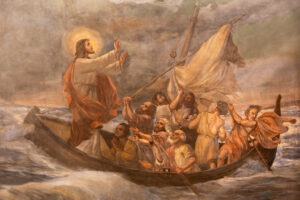
As we talk about transforming culture and the sanctification of culture, we cannot skip past our own conversion, discipleship, and catechesis. We have to ask: As we step into the world, is our identity strong enough to withstand the swirling storms of confusing narratives? Has the necessary virtue been formed in us through the Spirit and through repeated good actions in such a way that when we go into the world, we look, sound, and act differently from the people around us?
POLITICAL DUALISM
A second point Dr. Presley observes is that the early Christians lived with what he calls political dualism. The early Christians had a remarkable respect for earthly authority, but their ultimate allegiance was always to God. He shares a story about Polycarp who was brought before a Roman consul and put on trial. To the authority, Polycarp quoted Romans chapter 13, which speaks about how Christians are called to respect authority, pay taxes, and be good citizens. Polycarp was arguing that Christians are the best citizens because we respect earthly authority and we understand how it should never supersede our ultimate allegiance to God. This was his intention, even in that moment when he was on trial for being a bad citizen because he was worshipping the one true God instead of the multiple gods and because he was not participating in all that the Roman society was asking of him at the time.
IMPROVISATION METHOD
The third thing that I want to draw from this book is about the method for the sanctification of culture. A word he uses to describe this method is improvisation—to have an ability to navigate the various cultural moments and interactions in the Spirit and not just follow a set of strategies or scripts. In other words, Christians are called to move society not by simply laying out a strategy and sticking to it, but by being able to flow with the Spirit in each environment that they find themselves in so that whatever is demanded in that moment, they’re capable of responding.
This is most profoundly evidenced in the stories of the martyrs because each martyrdom was different. Every trial and every temptation within a martyrdom was different. He shares how Christians were able to flow in the Spirit and respond in the moment to what was right in front of them to extend the kingdom, to bear witness to the truth, and to remain faithful until the end.
ETERNAL PERSPECTIVE
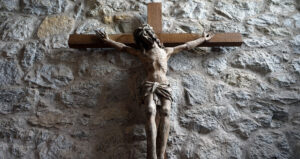
Perhaps the most recurring theme in the book is that the early Christian Church lived with an eternal perspective while they were committed to the moment. They were engaged in the temporal world around them, but they were always focused on what was to come. Their hope was in the Resurrection, not just in the transformation of a political entity or the culture. Their hope was in Jesus Christ, in Him crucified and risen from the dead. Their hope was in Him extending that life into them.
Dr. Presley gives a compelling example of this. He said that this hope was so tangible that the Romans were trying to squash the early Christians’ belief in the resurrection of the dead. In France, a group of Christians were martyred, and afterwards the Romans burned their bodies and threw them into the river so as to prevent them from rising from the dead. The Romans were committed to breaking the Christians’ hope because they saw how committed they were to their belief in the resurrection from the dead.
The Church needs to be radically and passionately committed to the here and now and the needs of this moment. We need to be committed to the needs of our world, the poorest of the poor, and everyone that the Lord places in our life, but we also need to keep an eye on where we’re going and our destiny in the Lord. Our hope, conviction, and assurance of what is to come can drive us, transform us, and help us to live differently in our society.
. . .
This article originally appeared in Renewal Ministries’ August 2026 newsletter and was condensed from Pete Burak’s YouTube video of the same title which can be viewed at https://youtu.be/kpDMoatljKU.
 rmartin@renewalministries.net
 Download Headshot 1 (JPG, 2MB)
 Download Headshot 2 (JPG, 2MB)
 Download Biography (PDF, 65KB)























0 Comments